
From Banker’s Box to Jury Box, How NAEGELI Deposition & Trial Handles Litigation Support in Boise

A trial exhibit rarely reaches a courtroom by accident. Before a jury sees a photograph or a single contract page on screen, that document has been collected, numbered, scanned, indexed, and loaded into a presentation system by someone whose name never appears in the verdict. Litigation support in Boise covers that unglamorous middle stretch of a case. It is also where deadlines tend to be won or lost.
NAEGELI Deposition & Trial has been doing this work for more than 45 years, and its Idaho litigation support operation runs out of downtown Boise. Court reporting anchors the practice. Arranged around it sit document processing, deposition video, interpreting, remote proceedings, and the trial technicians who run exhibits while a witness is on the stand.
Why Litigation Support in Boise Starts With Geography
Idaho is a large state with a short list of population centers. A construction dispute might involve a contractor in the north, an engineer in the Magic Valley, and an insurer headquartered somewhere else entirely, while the case itself sits on an Ada County docket. Distance stops being a detail in that situation. It sets the price of every deposition on the calendar.
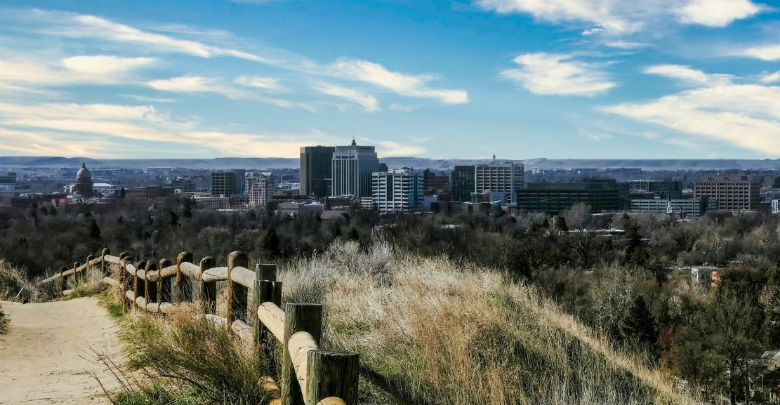
Boise absorbs most of the resulting traffic. The city holds the densest cluster of courtrooms, law firms, and corporate legal departments in the state, which makes it the default venue for testimony even when neither party lives nearby. NAEGELI Deposition & Trial in Boise keeps private conference space on West Bannock Street for that reason, a few minutes from the county courthouse and roughly fifteen minutes from Boise Airport. Visiting counsel can land, take a deposition, and fly home the same afternoon.
Not everyone travels anymore. Remote depositions over secure connections have absorbed much of what once required a plane ticket, which matters most for expert witnesses and corporate designees whose calendars open for two hours and shut again. The firm runs these proceedings live, with the reporter, the witness, and opposing counsel in three separate places. A rancher two hundred miles from the courthouse benefits from that as much as a witness overseas.
How Does an Exhibit Get From a File Room to a Courtroom Screen?
Document work begins long before anyone picks a jury. The copying and scanning team handles high-speed digitizing, Bates stamping, and OCR processing, which is what turns a stack of paper into a set someone can actually search. Trial binders come out of the same material. Once a matter closes, secure destruction disposes of sensitive files rather than leaving them to age in a storage unit.
Chain of custody governs the entire sequence. Case materials move through secure repositories with documented handling at each stage, and the firm operates under HIPAA compliance protocols, which carry real weight in medical litigation where exhibits contain protected health information. Careless handling of a document can cost a party the ability to use it. Careful handling is invisible, and that is rather the point.
What Does a Trial Technician Actually Do During Testimony?
A trial technician works from the edge of the courtroom and puts the right exhibit on screen the instant counsel calls for it. The job sounds mechanical. In practice, it means knowing the exhibit set well enough to read where an examination is heading, because ten seconds of silence while someone hunts for a page drains momentum in front of a jury.
The trial support team assembles documents, photographs, graphics, animation, and video into presentations configured for the particular courtroom and whatever display equipment it holds. That support runs from discovery through verdict and sometimes into appeal. Complicated commercial and medical matters lean on it hardest, since twelve non-specialists have to follow a technical argument in real time and cannot ask for a recap.
The Parts of Testimony a Transcript Cannot Hold
A written record captures words. It does not capture the fifteen-second pause before an answer, or the glance a witness gives counsel before responding. Certified videographers record depositions and sync the footage to the transcript, so attorneys can search by keyword and pull clips for trial. Video and text end up doing different jobs from the same afternoon of testimony.
Language adds a further layer. Certified legal interpreters cover more than 200 languages and dialects, including American Sign Language, which keeps a witness from having testimony filtered through an untrained bilingual relative. Transcription reaches past formal proceedings to hearings, meetings, voicemail messages, and 911 recordings, each reviewed before it goes out. For teams staring at several thousand pages, transcript summaries compress the record into an organized digest with key passages flagged.
One Point of Contact Instead of a Phone Tree
Scheduling is usually where litigation support falls apart. Each client works with a single assigned case manager rather than a rotating queue, so the person who booked a reporter for Tuesday already knows the matter when the deposition slides to Thursday. Production stays centralized at the Portland headquarters while court reporters and videographers work locally in Boise and the other markets the firm covers.
Marsha J. Naegeli, CCR, CMRS, CRI, founded the company and still leads it. The operating model has held steady across four decades of shifting courtroom technology. Exhibits appear on screens now instead of easels, and testimony arrives over a video link as often as from a chair across the table, though the underlying requirement has not moved an inch. The record has to be right, and it has to show up on time.
NAEGELI Deposition & Trial
950 West Bannock Street, Suite 1100
Boise, ID 83702
(208) 334-7000
(800) 528-3335
schedule@naegeliusa.com
