Biometric Access Control Systems: Why Organisations Are Replacing Outdated Entry Methods


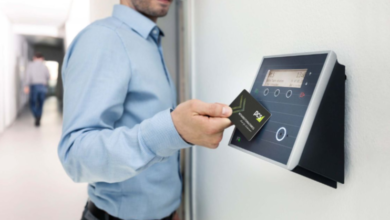
Access control technology is in the middle of its most significant transition in decades. Across the UAE, organisations that have relied on PIN codes and proximity cards for years are making a definitive move to biometric access control — driven by a combination of improving technology, declining hardware costs, and a growing recognition that the security gaps in legacy credential systems are simply not acceptable in modern commercial and government environments.
ACIX Middle East, a Dubai-based access control specialist serving corporations and government offices across the UAE and GCC, has been at the centre of this transition, supporting organisations across every sector as they upgrade from outdated entry methods to enterprise-grade biometric infrastructure.
The Fundamental Weakness of PIN and Card-Only Systems
The vulnerability shared by every PIN code and proximity card system is the same: they authenticate an object or a piece of knowledge, not a person. A PIN can be written down, shared, or observed. A proximity card can be lost, lent to a colleague, or — with widely available equipment — cloned from a distance without the cardholder’s knowledge.
These vulnerabilities are not hypothetical risks. They are the mechanism behind a significant proportion of unauthorised access incidents in commercial facilities, payroll fraud through buddy punching, and security breaches in regulated environments. The biometric access control system eliminates the shared vulnerability entirely by authenticating the person themselves — a characteristic that cannot be lent, lost, or easily duplicated.
Accuracy and Performance in UAE Enterprise Environments
A persistent concern about biometric access control in earlier years was accuracy — the rate of false rejections that create friction for legitimate users, and false acceptances that allow unauthorised individuals through. Modern enterprise-grade systems have resolved these concerns to the satisfaction of organisations across the UAE’s most demanding environments.
The Matrix Argo face recognition system, deployed by ACIX Middle East across UAE facilities, achieves recognition accuracy that meets the standards required for government and regulated commercial environments. According to HID Global’s 2025 State of Security and Identity Report, organisations using biometrics for physical access control are projected to grow from 39 percent to 48 percent globally within the year — a trajectory that reflects enterprise confidence in biometric accuracy rather than a leap of faith.

Fraud Prevention: Buddy Punching and Credential Sharing Eliminated
The financial cost of time fraud — employees clocking in for absent colleagues, or sharing access credentials to enter restricted areas — is significant across UAE enterprises managing large workforces. Manual and card-based systems make this fraud difficult to detect and almost impossible to prevent. A biometric door access control system makes it structurally impossible: the fingerprint reader or face recognition camera will not authenticate an individual who is not physically present.
For UAE organisations subject to MOHRE payroll compliance requirements, the tamper-proof attendance records produced by biometric systems also eliminate the disputes and investigations that arise from contested manual records — reducing both legal risk and HR administrative overhead.
Integration With HR and IT Platforms
The adoption of biometric door access control system in UAE has been accelerated by the maturity of integration capabilities. Leading systems offered through ACIX Middle East connect via open API to HRMS and payroll platforms, allowing attendance data from biometric devices to flow directly into workforce management systems without manual data entry.
This integration creates a closed-loop workforce management environment: biometric authentication at the door generates an access record and an attendance log simultaneously, both feeding into the platforms that manage payroll, performance, and compliance reporting. The administrative overhead of managing two separate systems — access control and time attendance — is eliminated in a single deployment.
The Transition: What UAE Organisations Need to Plan For
- Enrolment — biometric systems require an initial enrolment process where each employee’s biometric template is captured. Plan enrolment carefully for large workforces to ensure quality templates and a smooth go-live.
- Phased deployment — most UAE organisations transition gradually, replacing legacy hardware at key access points first and expanding across the estate over time.
- Data privacy compliance — UAE PDPL requires explicit consent for biometric data processing and appropriate data handling documentation.
- Integration testing — confirm compatibility with existing HRMS and payroll platforms before hardware selection to avoid post-deployment integration challenges.
Working With a Local Integration Specialist
The door access control system in Dubai market in the UAE is well served, but the quality of deployment varies significantly based on the integration expertise and local support capability of the implementing organisation. ACIX Middle East provides end-to-end project management for biometric access deployments across the UAE — from site assessment and system design through to hardware installation, software integration, enrolment support, and ongoing maintenance.
ACIX Middle East, based in Dubai, designs, supplies, and integrates biometric access control systems for corporations and government offices across the UAE and GCC. Contact ACIX’s team for a site assessment and system recommendation tailored to your organisation’s security requirements.